Case study
Park Avenue Community Center: marketing website and custom ops platform in one.
A community center. Eight integrations. One person.
What started as a next-gen website redesign evolved into a complete operational rebuild — new platform, new tools, new systems. The kind of project most agencies would staff with a team of six.
The situation
Every class listing, retyped every season. By hand.
The Park Avenue Community Center in Swarthmore, Delaware County, Pennsylvania had just merged two organizations into one. Their first generation Squarespace site had become too cumbersome to manage as the organization grew. Every time a new session of classes opened — health and wellness, arts and culture, kids programs, summer camps — someone on staff had to manually copy every listing out of their registration system and rebuild it on the website by hand. New season, same grind.
They were using a ticketing platform that didn't talk to anything. Their email marketing was disconnected. Fundraising was ad hoc. And when both the current session and the upcoming session needed to live on the site at the same time, there was no clean way to do it. Staff improvised. Visitors got confused.
None of this was unusual. It's what happens when a small organization tries to run serious operations on tools built for simpler ones.
Services implemented across a single engagement
What I built
One platform. Eight live integrations. Nothing retyped.
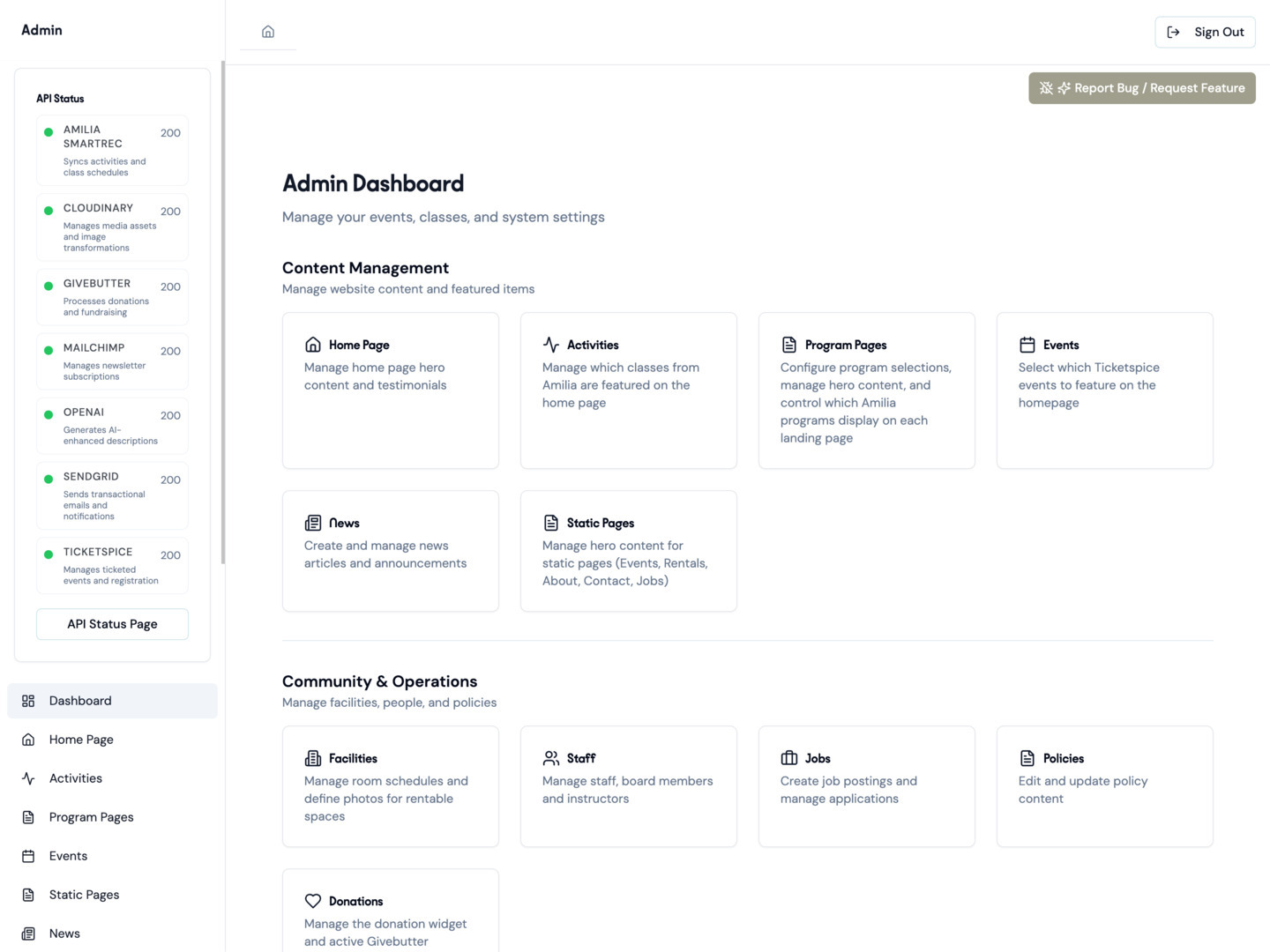
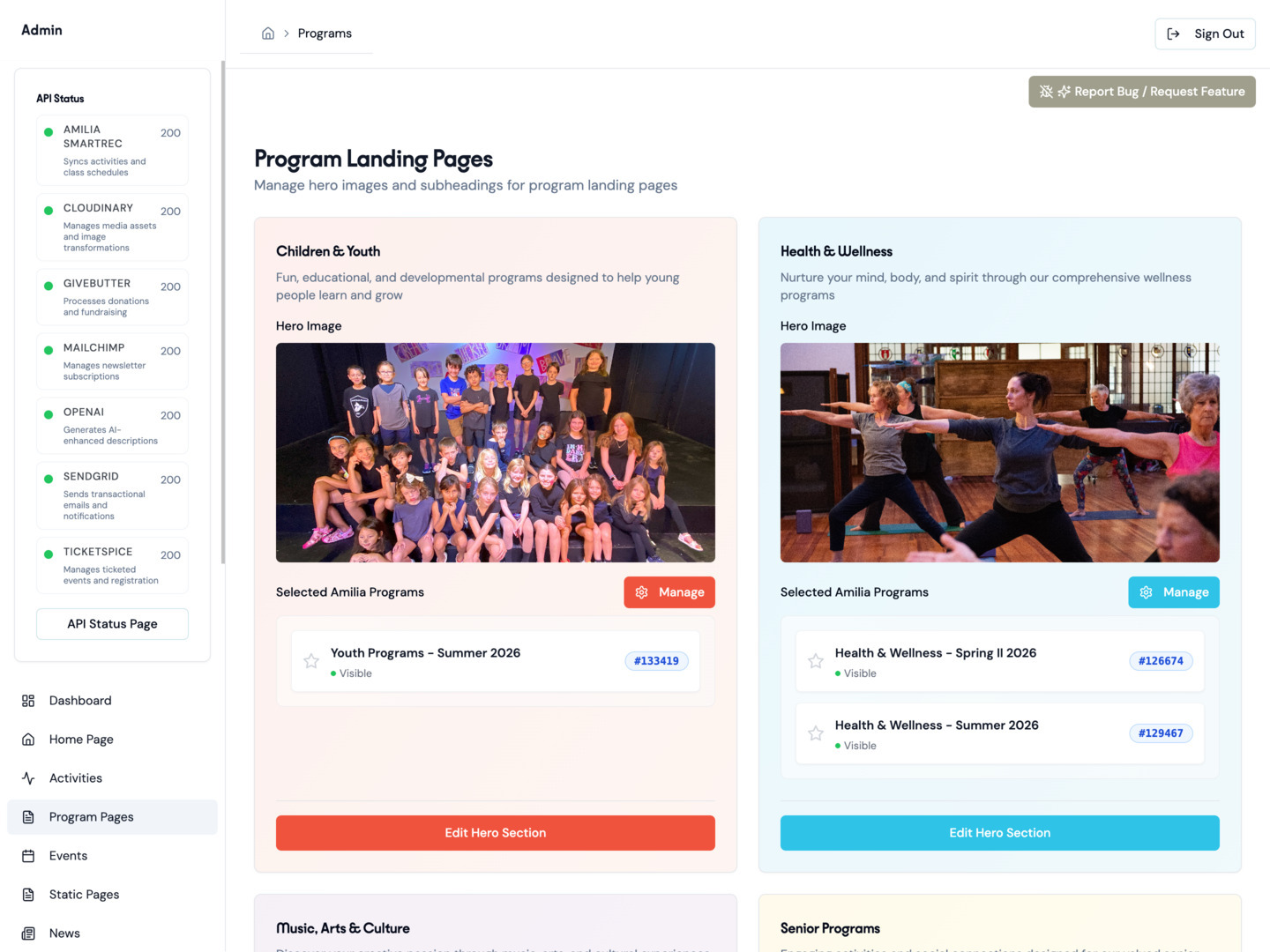
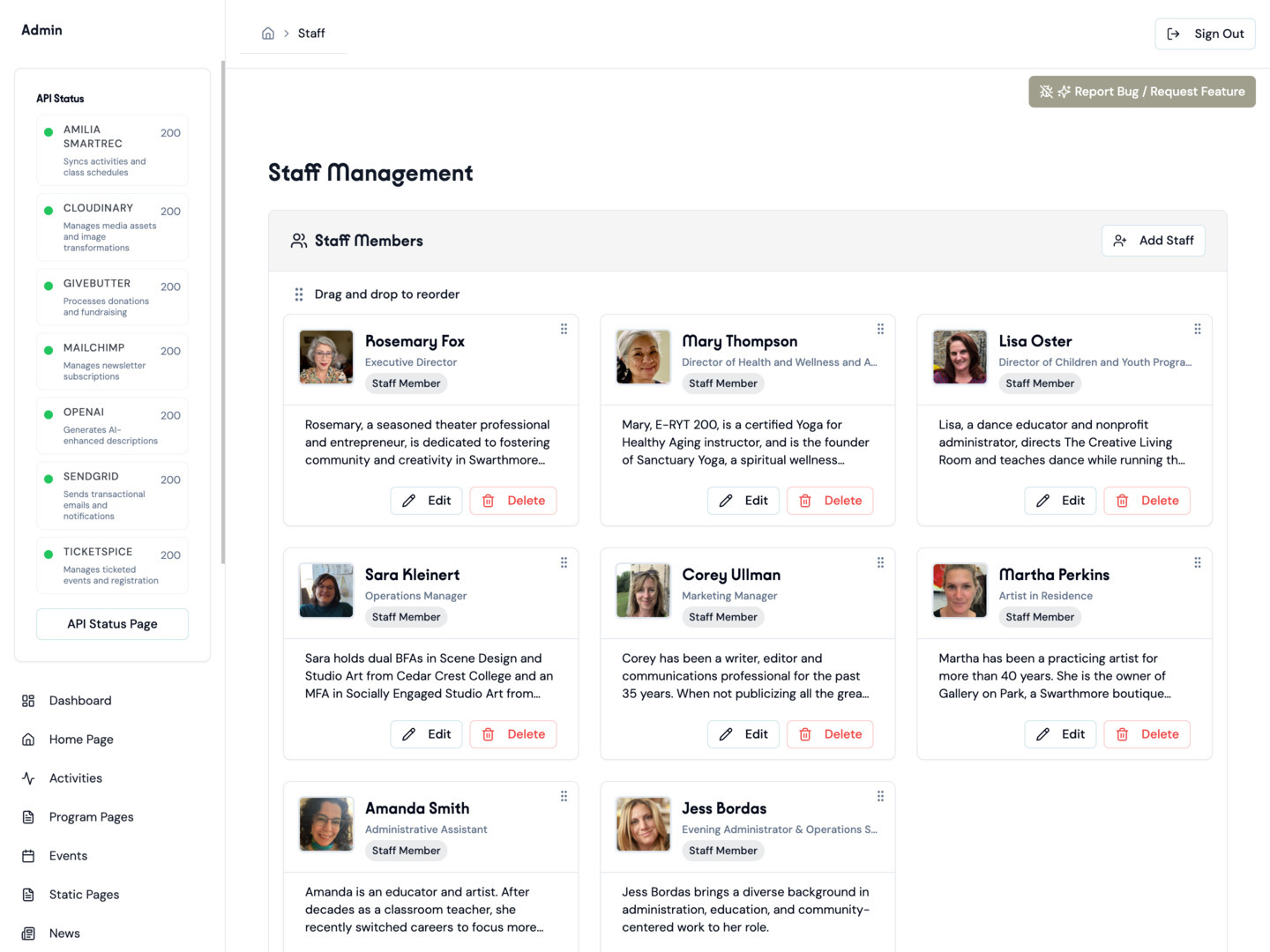
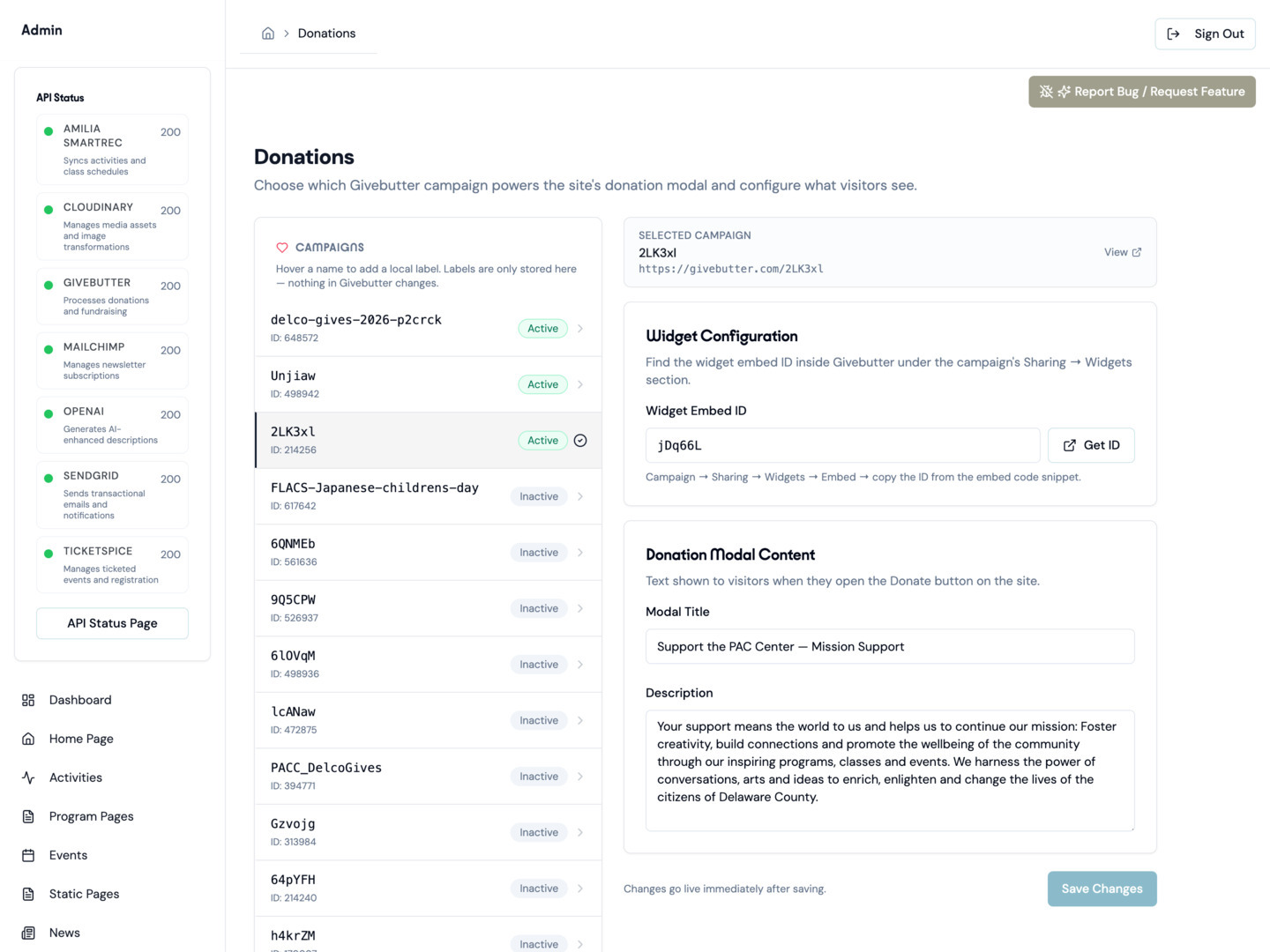
The ask was a new website. What I actually built was a custom web application — 25,000+ lines of code, a full admin control panel, and live connections to eight external services. All of it running on one codebase, managed by one person.
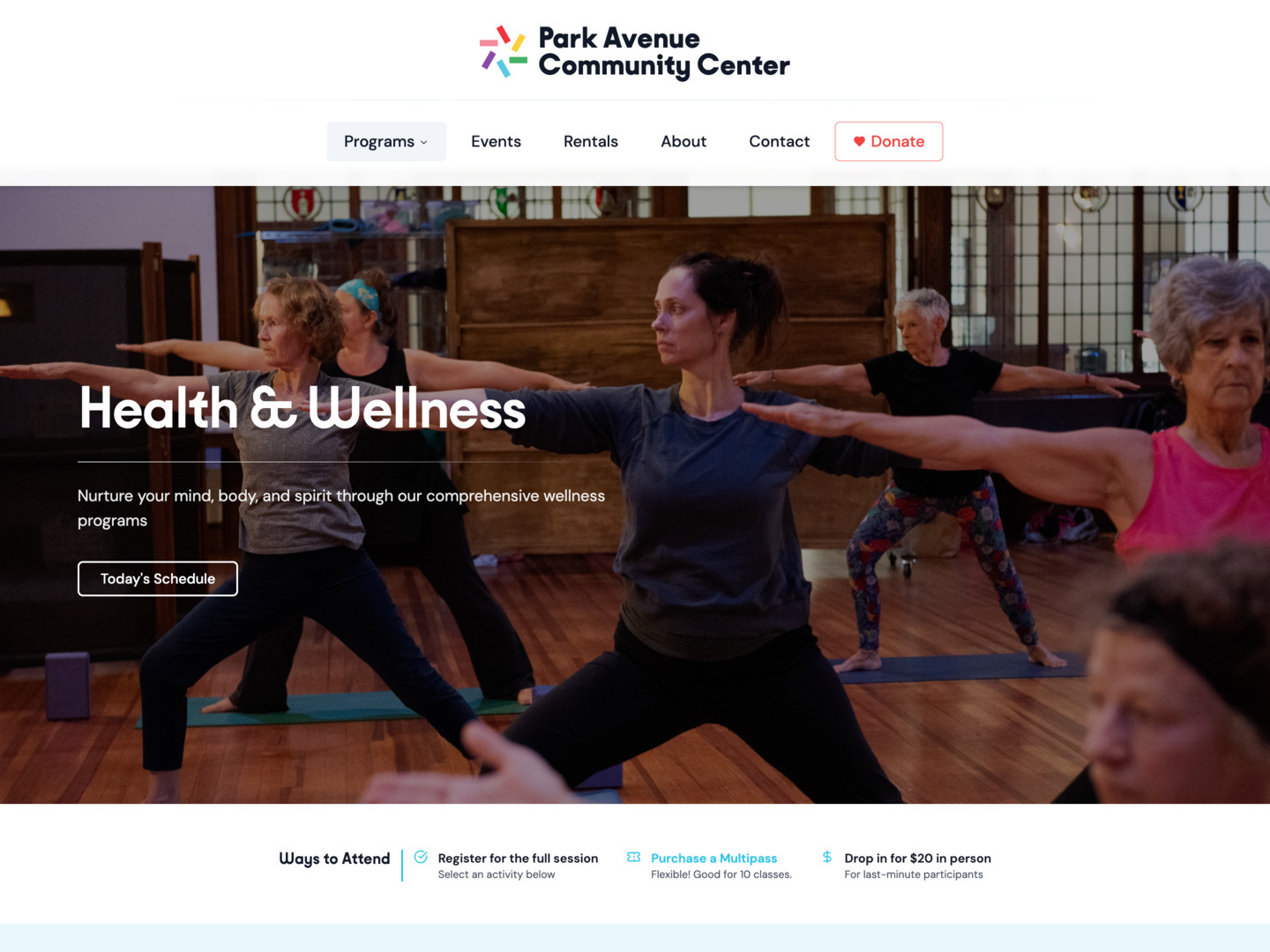
The platform pulls class and program data from Amilia SmartRec — their e-commerce platform for activities and recreation — automatically. When a new season activates, the site knows. It adds a tab. The old season stays visible alongside the new one, no manual intervention, no staff juggling two spreadsheets. When summer camp registration opens, the system handles it. 13,000 people used the site in the first six months.
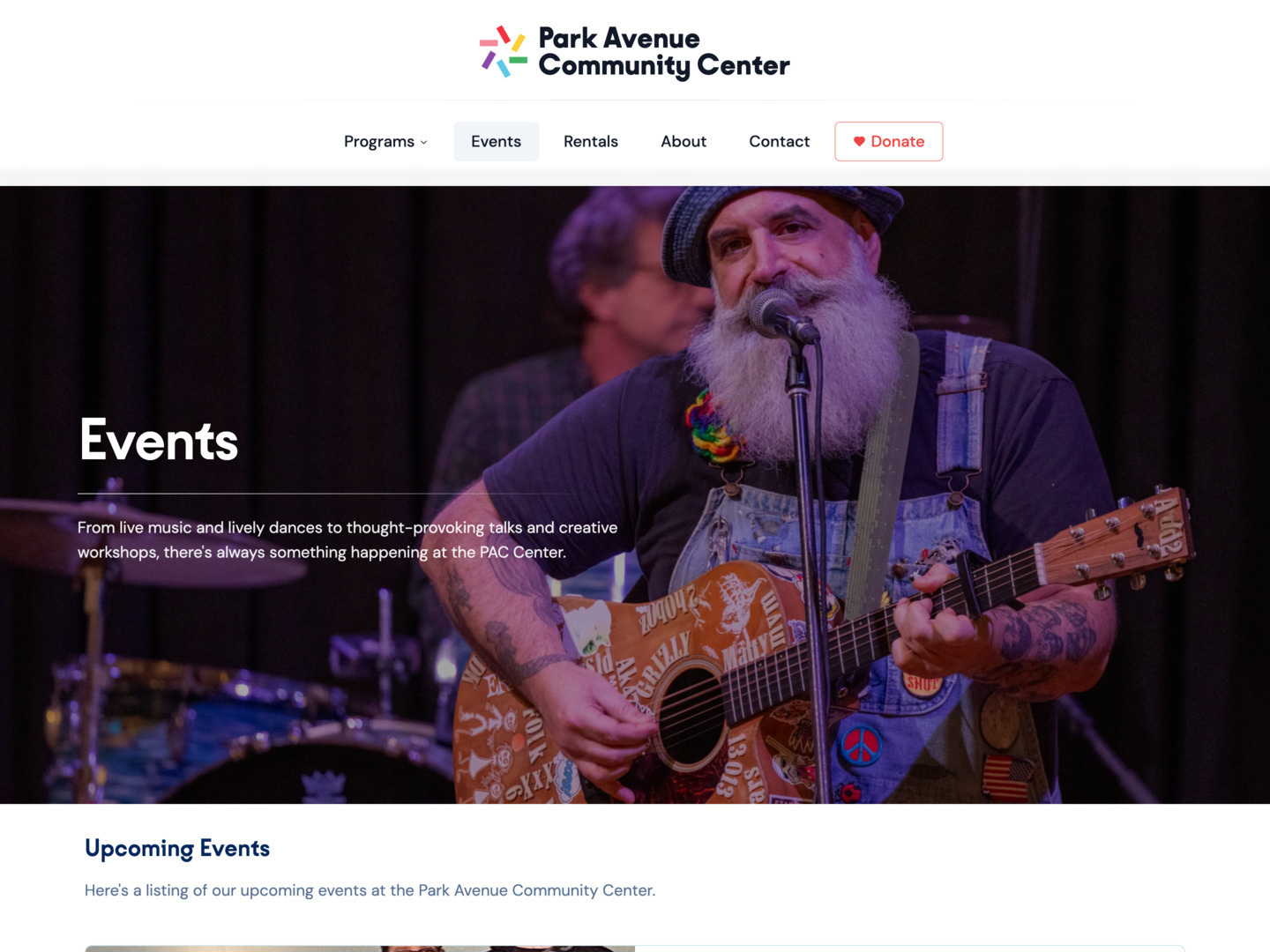
TicketSpice handles ticketed events. Cloudinary manages media. SendGrid delivers every transactional email the site generates. OpenAI writes SEO-optimized descriptions for events and activities on demand. Givebutter handles donations. Mailchimp handles the newsletter. All of it wired together so the staff never has to touch the underlying systems.
Every service maps to something that was broken or missing before.
See it for yourself
Flip through the platform
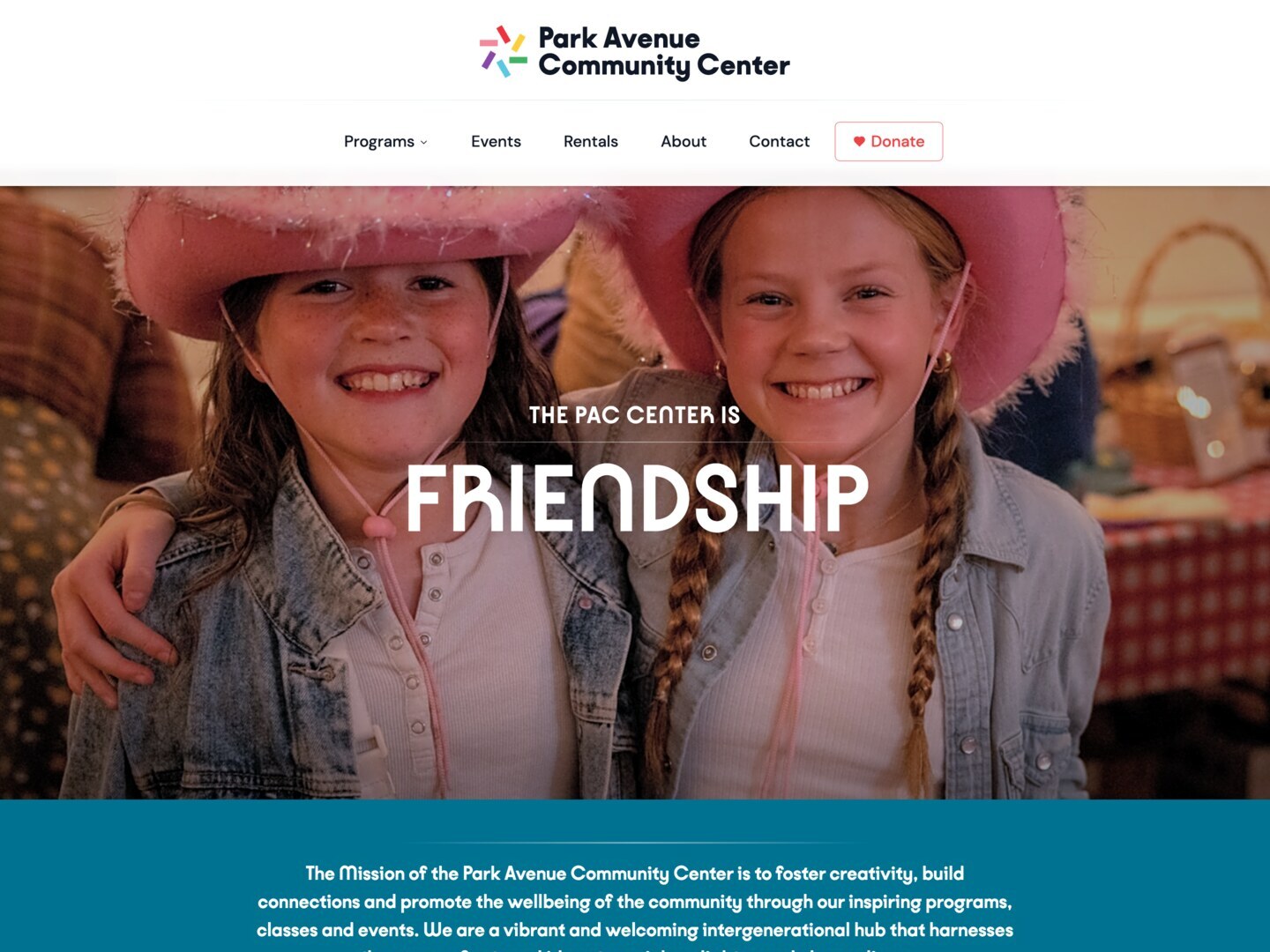
The homepage the community sees — a rotating photo hero, mission statement, and same-day schedule.
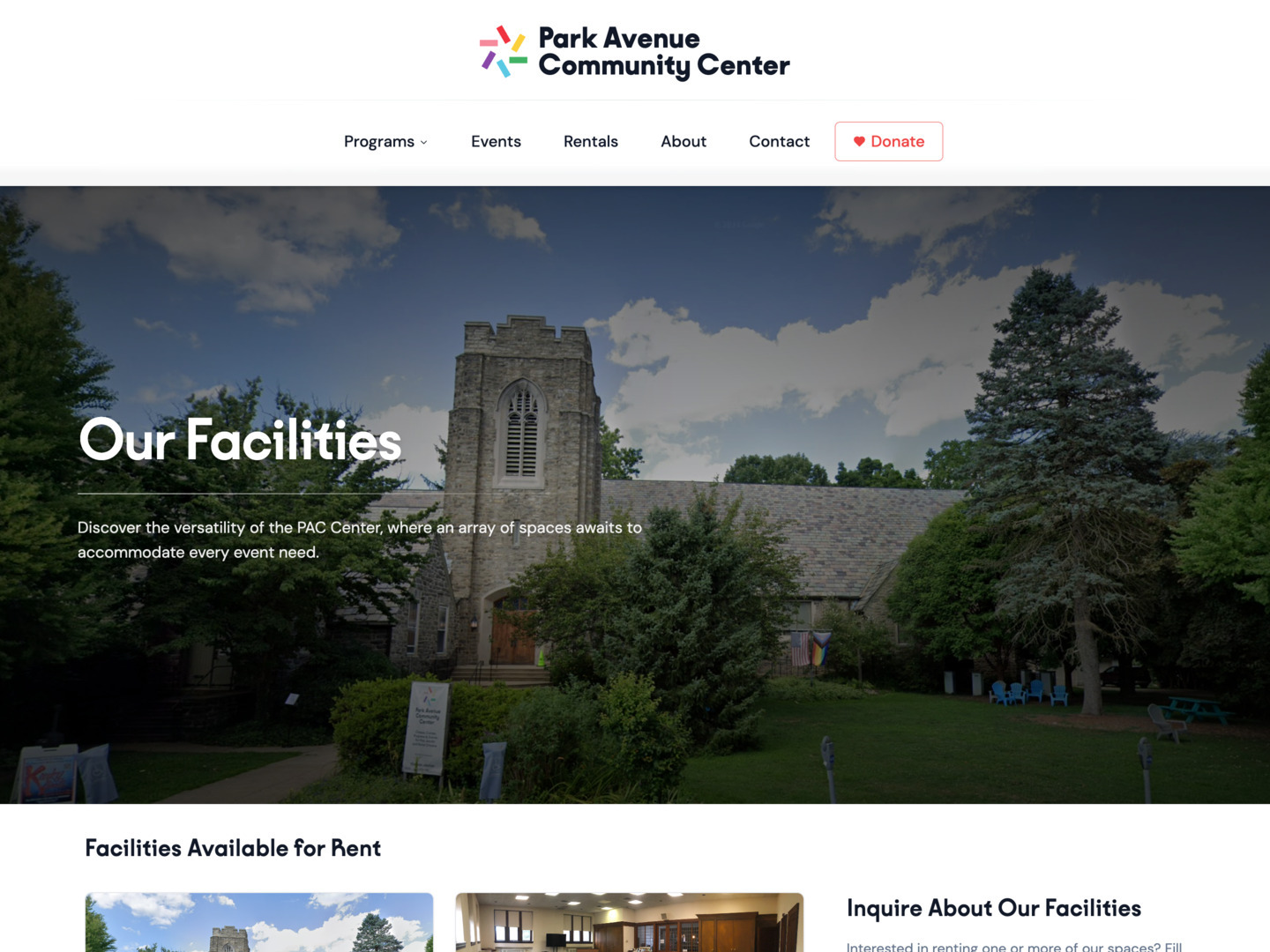
Click the screen for a closer look · use the list to flip
Services delivered
Website design & development
Custom site from scratch. No templates, no platform dependency. Built to reflect the quality of the work and to last.
Custom application development
The app they needed didn't exist — so I built it. Live data sync, automated season management, AI content generation, and a full admin system their team could actually use.
Google Workspace
Set up the organization on Google Workspace from scratch. Email, shared drives, admin access — configured and managed so it runs without thinking about it.
Domain & DNS management
Took the domain and DNS off their plate entirely. Still managed, still running, invisible to them.
Email marketing
Mailchimp integrated directly into the platform. Newsletter signups captured, lists managed, nothing that requires a separate login or manual export.
Payment processing
Three payment systems, one interface. TicketSpice for ticketed events, Amilia for class registrations, Givebutter for donations — all connected, all reporting in one place.
AI integration
OpenAI writes short descriptions for every activity and event in the system — SEO-ready, on demand, with logic that protects anything the team has written by hand from being overwritten.
Business process optimization
The whole point. Staff used to spend hours every session manually moving data from one system to another. They don't anymore.
Every one of these is available on its own — see the full services menu.
The numbers
Revenue processed through the platform in the first six months
Annualized run rate — 16% higher per month than the prior platform
Active users in the first six months after launch
Unique visitors in a single 30-day period
Reduction in homepage bounce rate vs. the prior site
Total cost of the engagement
For context: a project of this scope, staffed and billed at a full agency, runs $250,000 or more. The platform is live, processing real transactions, and serving a community of thousands. One person built it.
Sound familiar?
Your situation is probably fixable.
If you're running operations on tools that don't talk to each other, managing things manually that should run themselves, or paying an agency rate for things one experienced person can handle — that's what this is for. Tell me what's broken.
Get sorted